Are the Mendenhall Ice Caves Still There? (2026 Status Update)
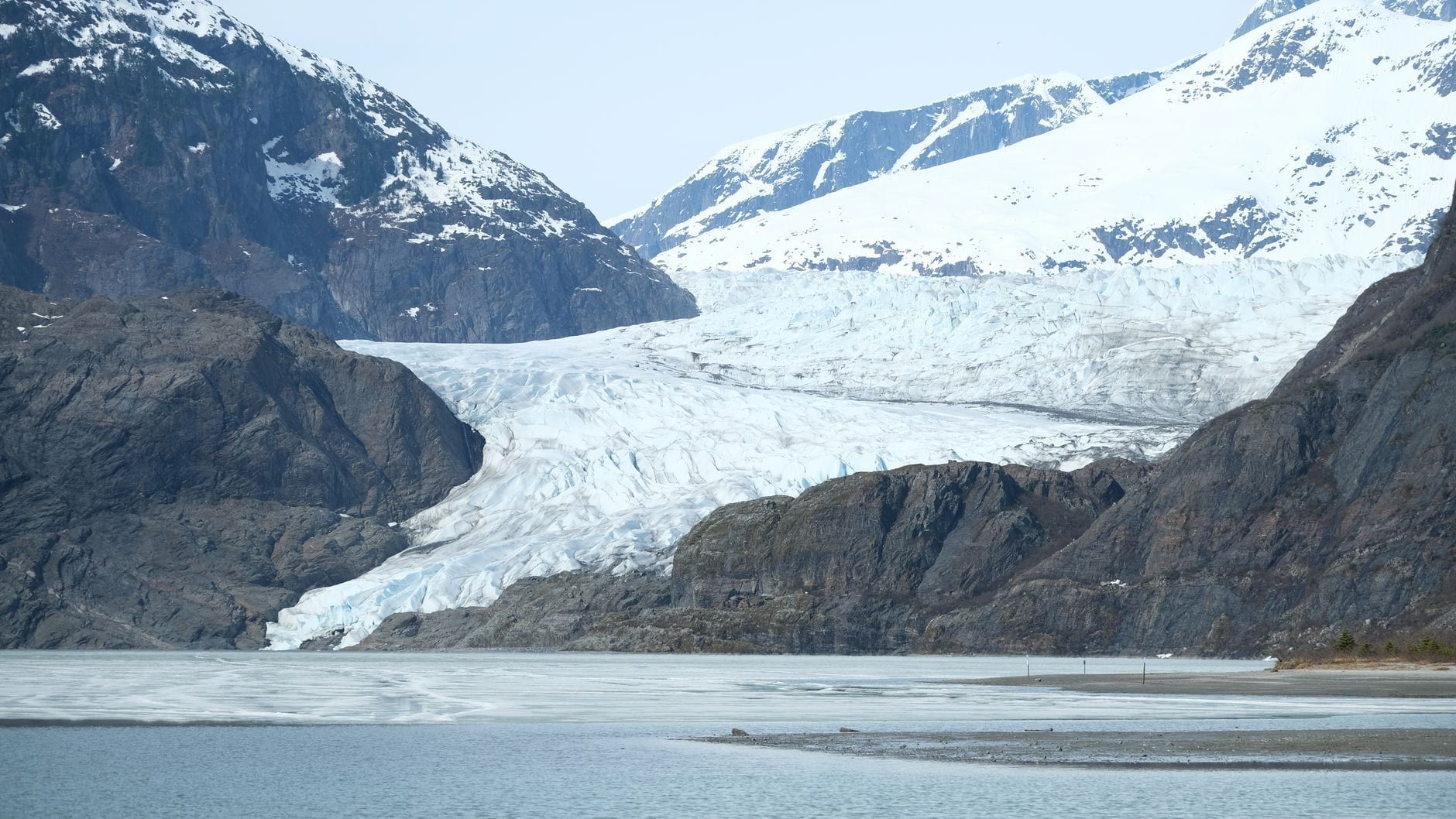
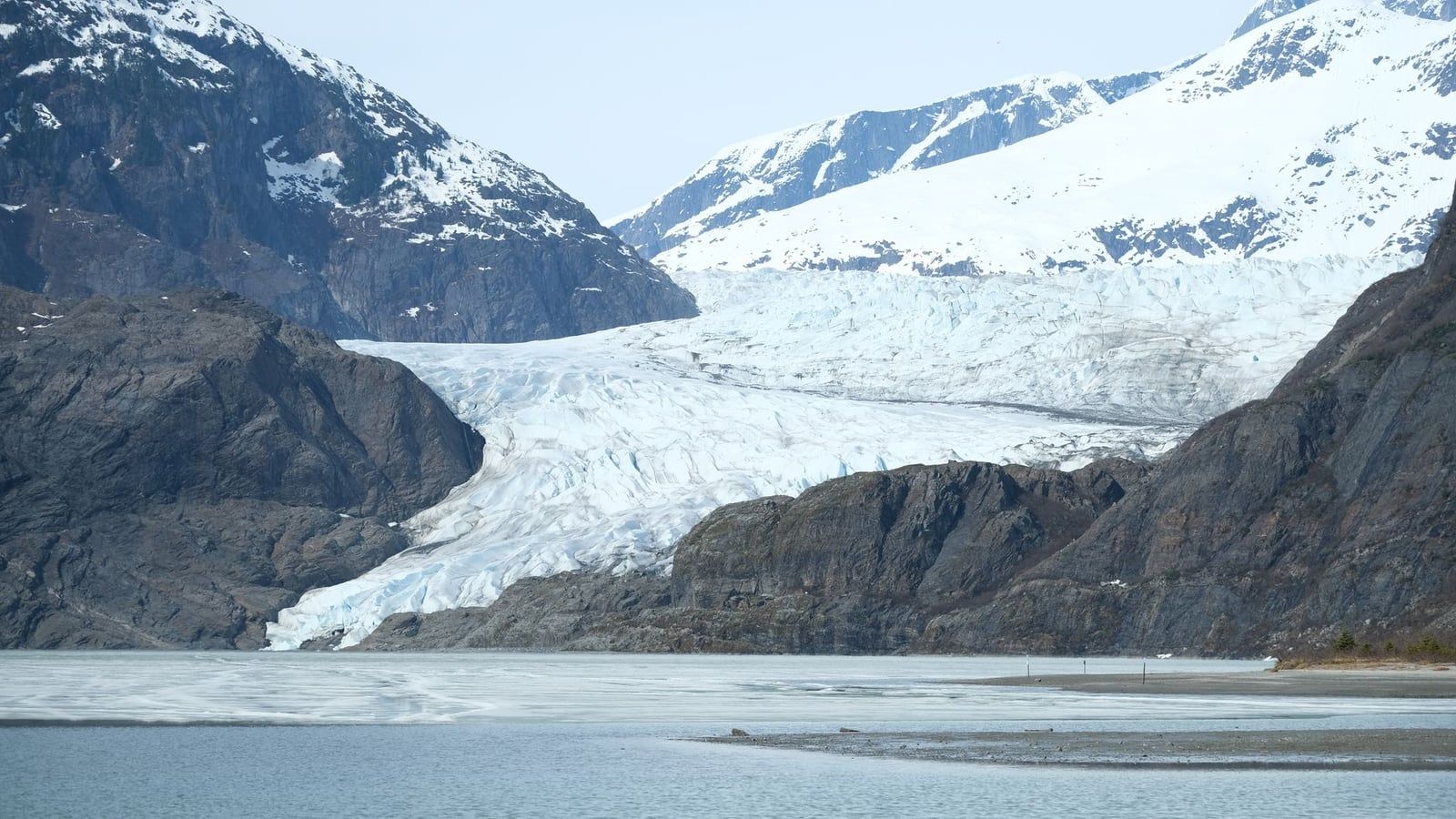
Short answer: no, not the caves you've seen on Instagram. The blue-ice tunnels that made Mendenhall famous between roughly 2010 and 2020 have mostly melted, and in November 2025 the glacier's face pulled back from Mendenhall Lake entirely for the first time in recorded history. If a Juneau trip is built around finding one, this is the update to read before you book anything.
The lake-terminating tongue of ice where those caves formed has splintered apart. Alaska Public Media reported in late November 2025 that scientists confirmed the glacier's face is no longer touching Mendenhall Lake at all - a first since researchers started tracking it. That thin, shallow ice at the terminus is exactly where the network of blue tunnels used to open up each summer.
This isn't sudden. Since about 2023, guides and outfitters have stopped promising cave access, because walking onto the glacier on foot generally requires a helicopter to reach stable ice above the crumbling terminus. Atlas Obscura's own listing for the ice caves carries a permanently-closed tag, noting the caves had largely melted away by 2020. Operators writing in mid-2026 describe what's left as largely gone, while allowing that a new cave could, in theory, open somewhere along the retreating edge. Nobody can promise you'll find it, and nobody should try alone.
That's why so many older blog posts and photo essays from 2016 through 2022 read like fiction now. They describe a real place that existed - but the ice that held it is gone. Treat any pre-2023 how-to-find-the-cave post as history, not a trip plan. For current visitor logistics, our hours and fees page tracks what's actually operating this season.
What Are the Mendenhall Ice Caves - and Why Is the Ice Blue?
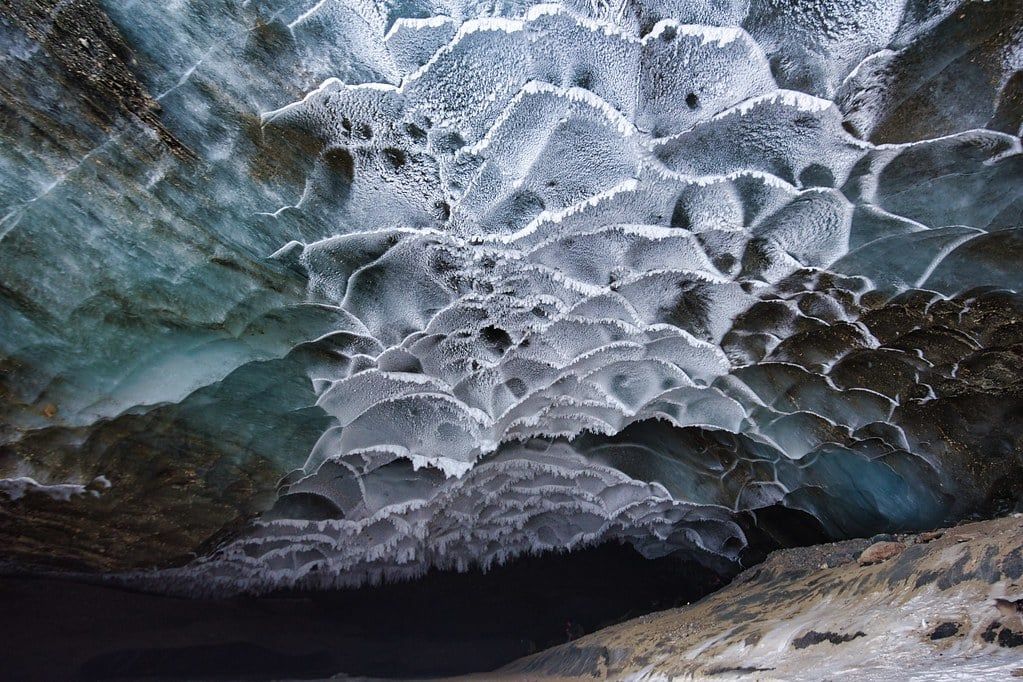
An ice cave, in glaciology terms, is a tunnel carved by meltwater running through or under the ice - different from a cave in bedrock that simply happens to hold ice year-round. At Mendenhall, summer melt found weak seams in the glacier and hollowed them into passages, some barely a crawl space, others tall enough to stand in and hear your own voice echo off the walls.
The blue comes from physics, not paint. Snow compacts into glacial ice over years, and the pressure squeezes almost all the air bubbles out. What's left is dense ice that absorbs every wavelength of light except blue, which it reflects back at you. Stand inside one of these caves and the light through the ceiling turns a saturated cobalt - the reason photos of Mendenhall's caves spread so far online in the first place.
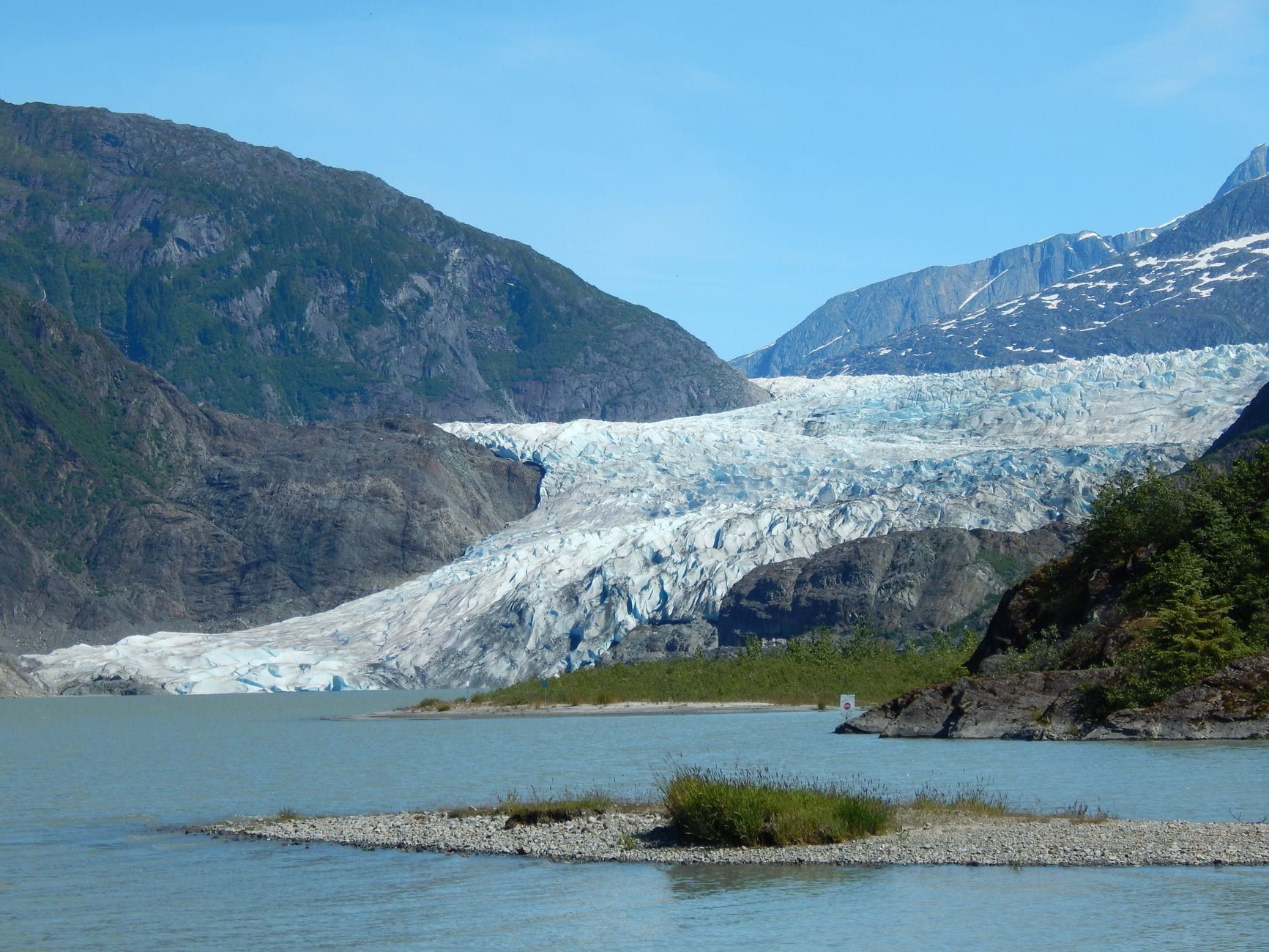
Mendenhall itself flows from the 1,500-square-mile Juneau Icefield, one of 38 glaciers that spill off it, stretching 13.6 miles down to what's left of its terminus. Caves like these were never permanent even at their best. They formed, collapsed, and reformed somewhere else along the ice edge for decades before this current disappearance - the difference now is that the lake-terminating ice that hosted them isn't there anymore. Our Mendenhall Glacier overview covers the wider history and visitor basics if you want the full picture.
Why the Caves Keep Disappearing: The Glacier's Retreat in Numbers
Mendenhall retreated slowly for centuries, then fast. Between 1500 and 1958 it pulled back about half a mile. From 1958 to 2020, it retreated nearly two miles - four times the distance in a third of the time.
The steepest single stretch came between 2007 and 2011, when the glacier lost roughly a football field of ice a year as huge icebergs calved into the deepest part of Mendenhall Lake. Lake ice simply melts faster than ice sitting on bedrock: researchers measured bedrock-terminating ice retreating about 56 feet a year between 1998 and 2020, versus 148 feet a year where the glacier met the lake - over two and a half times faster. That gap is the mechanism behind November 2025's detachment: the thin, fast-melting lake ice finally gave out completely.
Glaciologist Eran Hood, who has studied the retreat, projects the glacier could vanish from view of the visitor center by around 2050. That's within the lifetime of most people reading this. None of it has slowed the crowds - the Mendenhall Glacier Recreation Area still pulls in roughly 700,000 visitors a year, Juneau's single biggest draw. Most come for the view from shore now, not for what used to be inside the ice, and that view alone is still worth the trip.
How People Used to Reach the Ice Caves (For Context)
Two access routes dominate every pre-2023 guide to Mendenhall's caves, and understanding them explains why so much of that content is still floating around online even though it no longer leads anywhere safe.
Kayak or canoe across Mendenhall Lake
Guided paddlers used to cross Mendenhall Lake toward the glacier's west side, weaving between floating icebergs on a route that ran about 5 miles round trip and kept guests in the boat for up to three hours. It's still a striking way to get close to calving ice - kayak tours and canoe tours on the lake continue to run under limited Forest Service permits. What's changed is what waits at the far end: the caves paddlers once beached near have collapsed, so the payoff now is icebergs and the glacier's face, not a cave entrance.
On foot via the West Glacier Trail
The West Glacier Trail runs about 4.5 miles one-way from the Skater's Cabin Road trailhead, and hikers historically budgeted 3.5 to 4.5 hours each direction. The last stretch, off the maintained path, was always unmarked and technical - scrambling over moraine and glacial debris toward wherever that year's cave happened to be. Our guide to Mendenhall's hikes and trails covers the maintained sections in detail; treat the off-trail glacier approach as something to skip rather than attempt solo.
Winter frozen-lake crossings - don't
Some visitors used to walk straight across the frozen lake from the visitor center in winter. People have fallen through. Ice thickness on Mendenhall Lake is unpredictable year to year, and this route was never sanctioned by anyone managing the recreation area. Ice-cave season historically ran July through September anyway, when the caves were most stable - winter lake crossings were always a separate, riskier habit rather than a real access method.
Your Realistic Options for Experiencing the Glacier Today
Forget finding a cave and focus on what you can actually book in 2026. Here's how the realistic options compare.
| Option | Approx. Cost | Best For |
|---|---|---|
| Free viewpoint (Nugget Falls & visitor center) | Free trails; $5 day-use fee for the center | Reliable glacier views, no cave chance |
| Glacier Shuttle Tour | From $74 | Quick glacier viewing without gear |
| Whale Watching & Glacier combo | From $216 | Cruise-day visitors wanting two highlights |
| Guided Glacier Hike / Ice Adventure | $224-379 | Fit hikers wanting close contact with the ice |
| Private Glacier Trek | Custom pricing, higher than public tours | Families with kids as young as 8, extra time |
| Helicopter Glacier Trek | Premium, booked separately | The only reliable way onto stable, walkable ice |
A helicopter glacier trek is the most dependable way to reach stable ice these days. Flights lift off from Juneau and land above the crumbling terminus, on ice thick enough to explore safely with crampons and a guide - the kind of true glacier walking that used to start right from the trailhead. It costs more than a shore-based tour, but it's the option that still delivers real glacier travel rather than a view across the water.
Combining a glacier stop with a Juneau whale-watching cruise is the efficient move for cruise passengers with one afternoon ashore - whale watching and glacier combo tours pack both into a single outing from Auke Bay. If your Juneau time is open-ended, book a dedicated glacier hike instead and give the ice its own day.
Private Mendenhall Glacier Trek tours add an extra hour on the ice compared with public departures (nine hours versus eight) and drop the minimum age from 10 to 8, which matters if you're traveling with younger kids. Guided groups run at roughly a 6:1 client-to-guide ratio and sell out fast during peak cruise season, so book a glacier tour as soon as your Juneau dates are set.
Safety: Why This Isn't a DIY Adventure
Glacier travel kills people who treat it casually, and Mendenhall is no exception. The hazards are specific: ice or rock breaking loose overhead, meltwater streams running fast and cold enough to sweep someone off their feet, footing that shifts without warning, and weather that can turn from clear to whiteout in under an hour.
Beyond the maintained trail, the terrain is unmarked and unmaintained, and it's easy to lose the route back even in daylight. Travel Juneau reports that more than a dozen lost or injured hikers get pulled off the ice-cave route every year - a routine occurrence, not a rare one. Cell service near the glacier isn't reliable, so if you go, tell someone your exact route and expected return time.
The Mendenhall Glacier Recreation Area falls under the U.S. Forest Service as part of Tongass National Forest, and its posted guidance is blunt: stay out of ice caves, stay off lake ice, and don't go beyond marked trails without experience and proper gear. The risk here is injury or death, not inconvenience. If you want to set foot on the glacier, hire a guide - it's the difference between an outfitter with a satellite phone and a rescue statistic.
If You Do Go: Packing List and Planning Tips
Anyone booking a guided glacier hike should dress and pack for genuine alpine travel, not a lakeside stroll.
- Waterproof hiking boots plus a dry spare pair of socks
- Crampons or ice cleats, trekking poles, and a helmet (most operators supply these)
- Moisture-wicking layers, rain jacket and pants, warm hat and gloves - skip cotton and jeans
- High-protein snacks and at least 2 liters of water per person
- A full day of buffer time; round trips historically ran 8 hours or more
Pack out everything you bring in, including food scraps that could draw the black bears fishing Steep Creek during salmon season. The recreation area runs on standard Leave No Trace rules: stick to durable surfaces, and don't disturb moraine debris or vegetation for a photo.
Missed the Ice Caves? Other Accessible Alaska Ice Caves to Consider
If a Mendenhall ice cave was the whole reason for an Alaska itinerary, don't scrap the plan - just move it. Byron Glacier, off the Seward Highway near Portage, has a short, mostly flat approach trail leading to a glacier ice cave that has stayed more consistently reachable in recent years than anything at Mendenhall. Castner Glacier, near Delta Junction, holds a genuine blue ice cave that towers overhead in winter and fronts a roaring meltwater creek by summer - one of Alaska's better-known accessible examples.
Neither is a sure thing forever. Every glacier ice cave in Alaska carries the same collapse and thin-ice risk that closed Mendenhall's, and conditions shift year to year. Call ahead, check current trail reports, and treat any glacier cave the way you'd treat Mendenhall's old ones: worth seeing if you catch it in good shape, and never worth a dangerous shortcut to reach.
FAQ
Frequently asked questions
Are the Mendenhall ice caves still accessible in 2026?
No reliable public cave exists. The lake-terminating ice that formed the famous caves has largely collapsed, and in November 2025 the glacier's face fully detached from Mendenhall Lake. A new cave could form somewhere along the retreating edge, but nobody can guarantee it.
Can you still hike onto the Mendenhall Glacier?
Not safely on your own. Since around 2023, walking onto the ice without a helicopter has generally been unsafe because the retreating terminus left its edges unstable. Guided glacier hikes still approach the ice on routes a guide assesses that day, but none of them promise a cave.
Why are glacier ice caves blue?
Pressure inside the glacier squeezes almost all the air bubbles out of the ice, leaving it dense enough to absorb every wavelength of light except blue, which bounces back at you.
How much does a Mendenhall Glacier tour cost?
Public tours range from about $74 for a shuttle-and-view trip up to $216 for a whale-watching-and-glacier combo and $224-379 for a guided glacier hike or ice-adventure tour. Private tours and helicopter treks cost more but add time and flexibility.
How do you get to Mendenhall Glacier from Juneau?
The visitor center sits about 12 miles from downtown Juneau, roughly 25 to 30 minutes by car, or about 5 miles from Juneau International Airport. Most visitors arrive by rental car, private shuttle, or booked tour, since the public bus stop is still a 30-minute walk from the entrance.
Is it dangerous to visit the Mendenhall ice caves?
Yes. Hazards include falling ice and rock, fast meltwater, unstable unmarked terrain, and weather that shifts fast, and Travel Juneau reports more than a dozen lost or injured hikers rescued from the route every year. Go with a guide or don't go.
When was the last time the Mendenhall ice caves were open?
The best-known caves had largely melted away by around 2020, according to Atlas Obscura's listing, with smaller caves reforming in occasional years after that. By 2023 operators had stopped promising cave access at all, and by November 2025 the glacier had detached from the lake entirely.
Are there other ice caves in Alaska I can visit instead?
Yes. Byron Glacier near Portage and Castner Glacier near Delta Junction both have glacier ice caves that have been more consistently reachable in recent years, though conditions should still be checked before heading to either one.
Sources
- alaskapublic.org/news/environment/2025-11-26/juneaus-mendenhall-glacier-has-offi
- en.wikipedia.org/wiki/Mendenhall_Glacier
- fs.usda.gov/r10/tongass/recreation/mendenhall-glacier-interpretive-visitor-cente
- fs.usda.gov/r10/tongass/offices/mendenhall-fees-and-passes
- traveljuneau.com/blog/post/introduction-to-the-mendenhall-ice-caves